
The £1.5 Billion Wake-Up Call: A Case Study on the JLR Cyber Attack and the Need for OT Resilience
What happens when a digital threat brings the physical world to a grinding halt? In the late summer of 2025, Jaguar Land Rover (JLR) found out in the most brutal way possible. A sophisticated cyber attack didn't just steal data; it silenced the factory floors, halted the assembly lines, and triggered a financial hemorrhage so severe it required a £1.5 billion ($2 billion) government-backed loan to prevent a systemic collapse of the UK's automotive supply chain.
For years, industrial organizations have debated the ROI of robust cybersecurity for their Operational Technology (OT)—the complex web of hardware and software that controls physical processes. Many have treated it as a discretionary IT expense, disconnected from the core business of making and moving things. The JLR incident ends that debate. It provides the ultimate, painful proof that a mature, framework-driven cybersecurity program is no longer a technical line item but a fundamental prerequisite for operational resilience, financial stability, and corporate survival. The anatomy of this particular disaster doesn't just serve as a warning; it provides a clear blueprint for prevention.

Image Description: A bustling city street is thrown into chaos by a cyberattack, causing a massive crack to split the pavement beneath a hovering SUV, as panicked pedestrians flee the ominous environment.
For your convenience, this content has been developed to serve as a quick reference, summarizing the key information and milestones of the Jaguar Land Rover (JLR) cyber attack.
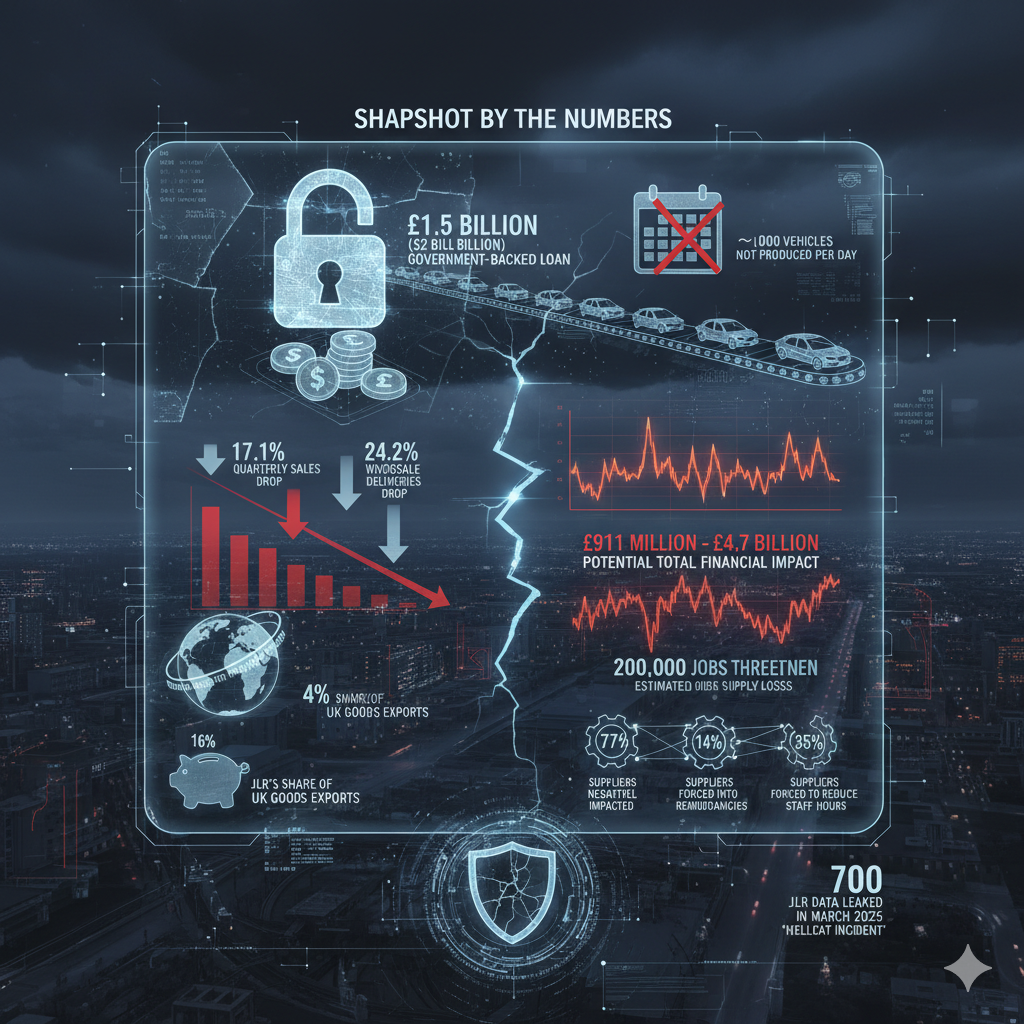
Here are the key numbers from the JLR cyber attack:
- Government-backed loan: £1.5 billion
- Production halt: August 2025 - October 2025
- Vehicles not produced per day: ~1,000
- Quarterly sales drop: 17.1%
- Wholesale deliveries drop: 24.2%
- Estimated direct weekly losses: £500 million
- Estimated financial impact: £911 million - £4.7 billion
- JLR's share of UK goods exports: 4%
- Jobs threatened in the supply chain: 200,000
- Suppliers negatively impacted: 77%
- Suppliers forced into redundancies: 14%
- Suppliers forced to reduce staff hours: 35%
- Predatory bank loan interest rates: 16%
- JLR Data leaked in March 2025: 700
---# A Cautionary Tale: The Jaguar Land Rover Cyber Attack
To understand the solution, we must first deconstruct the catastrophe. The attack on Jaguar Land Rover (JLR) wasn't a single event but the culmination of unheeded warnings and a failure to manage the convergence of Information Technology (IT) and Operational Technology (OT).
The Background: Unheeded Warnings
The groundwork for the August shutdown was laid months earlier. In March 2025, JLR was targeted by a ransomware group known as "Hellcat" which gained access using stolen credentials from an infostealer. This incident, which resulted in the leak of 700 internal documents, was a clear signal that the company's access controls were being actively targeted and compromised.
The warnings grew more explicit in June 2025 when a cybersecurity firm, Deep Specter Research, discovered active JLR credentials on hacker forums. The firm reportedly sent warnings to JLR about the targeted campaign but received no response, setting the stage for the subsequent disaster.
The Incident: Crossing the IT / OT Divide
On August 31, 2025, the main attack was detected at JLR's Halewood factory. A brazen syndicate calling itself "Scattered Lapsus$ Hunters"—a likely collaboration between notorious cybercrime groups—claimed responsibility. Their method was a composite of modern attack techniques.
The initial access was almost certainly gained using the previously stolen credentials, likely weaponized through a sophisticated social engineering campaign. The probable target wasn't a JLR executive, but an employee at its own IT service provider, Tata Consultancy Services (TCS)—a sister company within the same parent conglomerate. This highlights a critical, often overlooked risk: that even intra-group service providers can become a primary vector for attack.
Once inside the corporate IT network, the attackers moved laterally, evading detection. The critical failure, however, was their ability to cross the once-sacred boundary from the IT environment to the OT environment. JLR’s "smart factories, where everything is connected," designed by its partner TCS for hyper-connectivity and efficiency, became its single greatest vulnerability. The company's response is the most telling evidence of this architectural flaw: facing an unstoppable intrusion, JLR made the drastic decision to proactively shut down its entire global production network to contain the breach. A manageable IT incident had metastasized into a complete operational catastrophe.
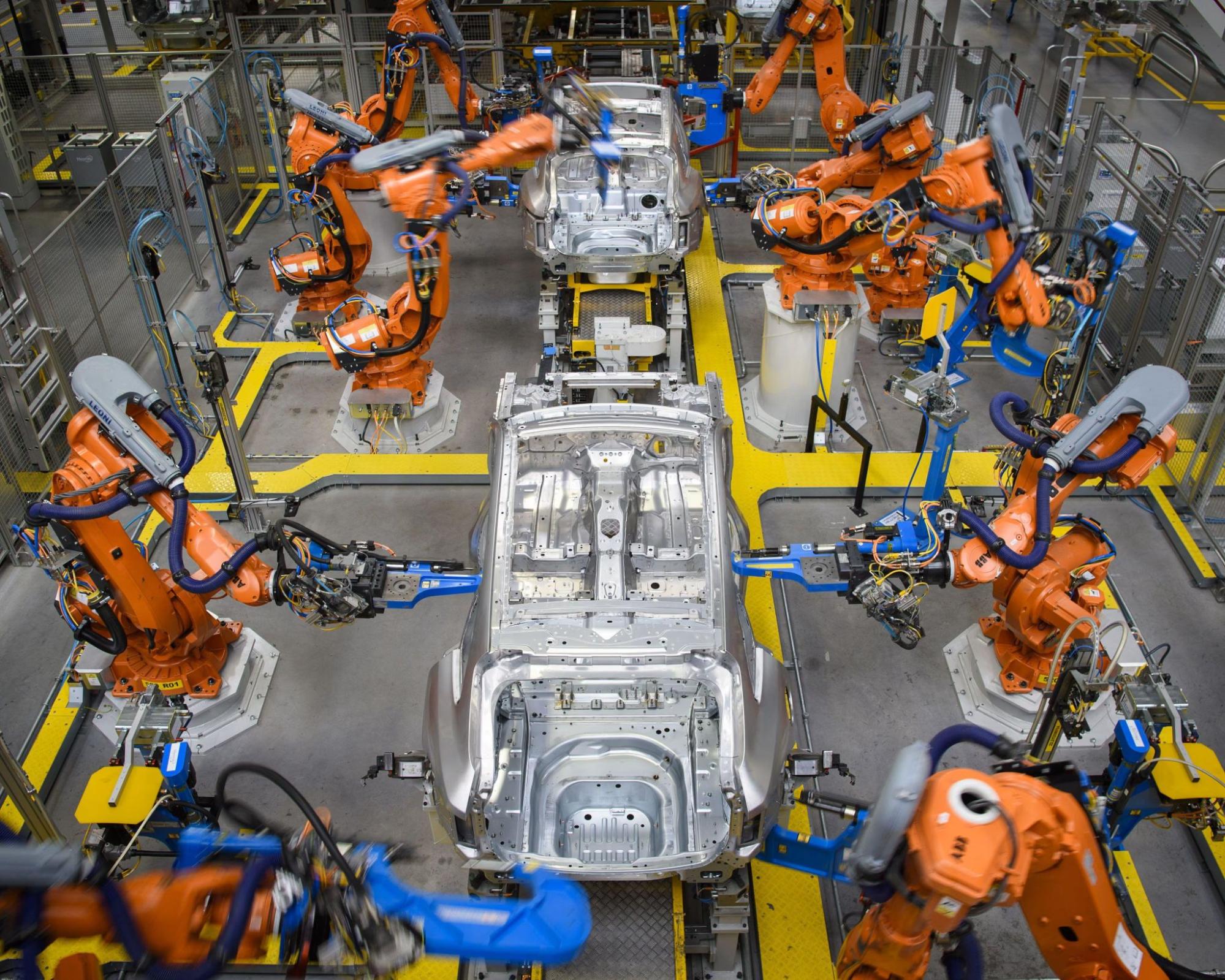
Source: Matt Crossick/Alamy and The Guardian. A photo illustrating Smart Factories: the Industry 4.0 “just-in-time” manufacturing network.
Deconstructing the Kill Chain
This section summarizes the probable stages of the attack, mapping the adversary's actions to the seven steps of the Cyber Kill Chain model. Please note that as the investigation into this cyber incident is still active, these details are based on the evidence available to date and are subject to change.
The consequences were staggering. For over a month, Britain's largest carmaker produced zero vehicles.
-
Financial Ruin
-
With production of 1,000 vehicles per day halted, direct weekly losses were estimated as high as £500 million, with a potential total impact ranging from £911 million to an astonishing £4.7 billion. This loss most certainly qualifies as material, as it is more than 50% of last year’s net profit of $2.4b (£1.8b).
-
A Failure of Governance
-
The devastation was compounded by a shocking oversight: JLR reportedly had no active cyber insurance policy, forcing it to absorb the full, uncapped financial burden of the crisis.
-
Systemic Economic Shock
-
The shutdown of Jaguar Land Rover sent a shockwave through the UK's economy, demonstrating the company's critical role as an economic anchor responsible for 4% of all UK goods exports and nearly 0.5% of the nation's GDP. The halt in operations threatened up to 200,000 jobs and plunged hundreds of smaller suppliers into an immediate cash flow crisis.
A survey by the Black Country Chamber of Commerce quantified the devastation: 77% of supply chain businesses were negatively impacted, with 44% describing the situation as "significant." The human cost was immediate, as 14% of firms were forced into making redundancies and 35% had to reduce staff hours. This financial distress was so acute that when desperate suppliers sought emergency funding, they were met with predatory bank loans carrying interest rates as high as 16%.
Ultimately, JLR's security failure became a catastrophic event that externalized immense financial risk onto the smaller, more vulnerable companies that depended on it for their survival, such as a 17-person metal pressing firm forced into layoffs and another supplier that had to layoff 40 employees—nearly half its workforce.
-
Unprecedented Intervention
-
The crisis escalated to a matter of national economic security, compelling the UK government's unprecedented £1.5 billion loan guarantee to prevent the systemic collapse of a vital industrial ecosystem.
Chronology of the Crisis
The cyber incident was not a single event but the culmination of a sustained campaign. This section summarizes the key milestones of the phased cyber attack leading to the global shutdown.
The JLR incident stemming from preventable and fundamental weaknesses in securing a converged IT and OT environment. It underscores the critical need for other organizations to adopt a structured, framework-based methodology. This approach is essential for developing resilient OT/ICS security programs. Building this resilience starts by utilizing established cybersecurity frameworks specifically designed for OT and ICS, which offer a guide for safeguarding factory operations. Key examples include:
-
A comprehensive series of standards developed by the International Society of Automation (ISA) that provides a flexible framework for addressing and mitigating security vulnerabilities in Industrial Automation and Control Systems (IACS).
-
A comprehensive framework from the U.S. National Institute of Standards and Technology that helps organizations manage and reduce cybersecurity risks across all sectors and sizes, regardless of their technical sophistication or maturity level.
-
A detailed guide from the U.S. National Institute of Standards and Technology that provides guidance on how to secure OT while addressing their unique performance, reliability, and safety requirements.
-
Developed by the Cybersecurity and Infrastructure Security Agency, this provides high-level guidance and best practices for securing critical infrastructure and industrial environments.
-
ENISA Good Practices for Security of IoT in the Context of Smart Manufacturing
-
A comprehensive guide from the European Union Agency for Cybersecurity that outlines good practices, threats, and security measures across policies, organizational practices, and technical domains for securing IoT in Industry 4.0.
-
CIS Controls Implementation Guide for Industrial Control Systems
-
A guide from the Center for Internet Security that provides specific guidance on how to apply the prioritized, defense-in-depth best practices of the CIS Controls to an ICS environment.
Synthesizing Lessons to Frameworks
The following table synthesizes the key lessons from the JLR incident and maps them directly to actionable, framework-based controls, serving as a strategic blueprint for action. Please note that as the investigation into this cyber incident is still active, these details are based on the evidence available to date and are subject to change.
PR.AA-05: Access permissions are defined in a policy, managed, enforced, and reviewed, and incorporate the principles of least privilege.
ID.AM-02: Inventories of software, services, and systems managed by the organization are maintained.
This roadmap can be distilled into a clear, four-step action plan:
- Begin by gaining complete visibility. You cannot protect what you do not know you have. Conduct a thorough discovery and inventory of all connected IT and OT assets to establish a baseline and identify the most critical systems.
- Implement the single most effective risk-reduction measure: network segmentation. Create a defensible boundary between the corporate IT network and the critical OT environment. Isolate factory networks from one another. This action contains breaches and prevents them from becoming operational catastrophes.
- Move from ad-hoc security efforts to a mature, defensible posture. Develop a formal OT security program that defines roles, responsibilities, policies, and procedures for everything from risk management to incident response.
- Use the CIS Controls for ICS as a prioritized checklist to implement foundational security measures. Focus relentlessly on the basics: managing accounts and access, patching critical vulnerabilities, and monitoring network traffic for signs of malicious activity.
Industry Trends: The High Cost of Inaction
These incidents are not isolated. Across the globe, industrial giants have learned the hard way that gaps in security planning—technical or procedural—can lead to devastating consequences.
-
Norsk Hydro: In 2019, the Norwegian aluminum producer was hit by the LockerGoga ransomware, forcing it to halt or slow production across 170 sites in 40 countries. The company chose not to pay the ransom and instead undertook a massive recovery effort. The total financial impact of the attack was estimated to be up to $70 million in the first year alone, primarily from lost production and remediation costs.
-
Colonial Pipeline: In 2021, a ransomware attack on the IT systems of the largest fuel pipeline in the U.S. led the company to proactively shut down its OT pipeline operations for fear of the attack spreading. This caused massive fuel shortages across the East Coast. The company's CEO confirmed they paid a $4.4 million ransom, and the five-day shutdown resulted in significant economic disruption and lost revenue.
These examples underscore a critical point: the cost of proactive security, while not insignificant, is dwarfed by the financial and operational cost of a major incident.
Conclusion: Your Biggest Threat is Also Your Greatest Opportunity
The JLR crisis forces a fundamental rethinking of the value of OT security. In the era of Industry 4.0, where just-in-time manufacturing models are the norm, the greatest threat to efficiency is no longer waste on the factory floor; it's unscheduled, catastrophic downtime.
However, this challenge also presents an opportunity. By embracing a proactive, financially-driven approach to cybersecurity, you can transform risk into a competitive advantage. Companies that build resilient supply chains will not only protect their bottom line but will also become the most reliable and sought-after partners in the industry. The first step is to stop guessing about your OT cyber risk and start managing it. Your balance sheet will thank you.